
Hunza Valley Travel Guide
Overview
Hunza Valley sits in the northern reaches of Gilgit-Baltistan, framed by some of the most dramatic mountain scenery on earth. Snow-capped peaks, ancient forts perched on rocky outcrops, terraced orchards, and turquoise lakes make it one of the most visited destinations in northern Pakistan, and one of the most approachable for first-time travelers to the region.
The valley's main settlements are Karimabad and Aliabad, both strung along the Karakoram Highway. The local population is predominantly Burusho and Wakhi, and the majority follow the Ismaili branch of Islam. Hunza is known for its high literacy rates, welcoming guesthouses, and a relaxed, community-oriented atmosphere. Travelers come for the scenery, but many remember the warmth of the people just as vividly.
Top attractions
Baltit Fort
Overlooking Karimabad from a rocky hilltop, Baltit Fort is Hunza's most iconic landmark. This 700-year-old former royal residence blends Tibetan and Central Asian architectural styles, with intricately carved wooden balconies, a small museum, and panoramic terraces. Guided tours explain the history of the Hunza state and its rulers. Arrive in the late afternoon for the best light on the surrounding peaks.
Altit Fort
A short walk from Baltit, Altit Fort is older and quieter, believed to be the original seat of the Hunza rulers. Restored with support from the Aga Khan Trust for Culture, the fort houses exhibits on local life and culture. The village around it, with its narrow lanes and traditional stone houses, is worth exploring on foot.
Attabad Lake
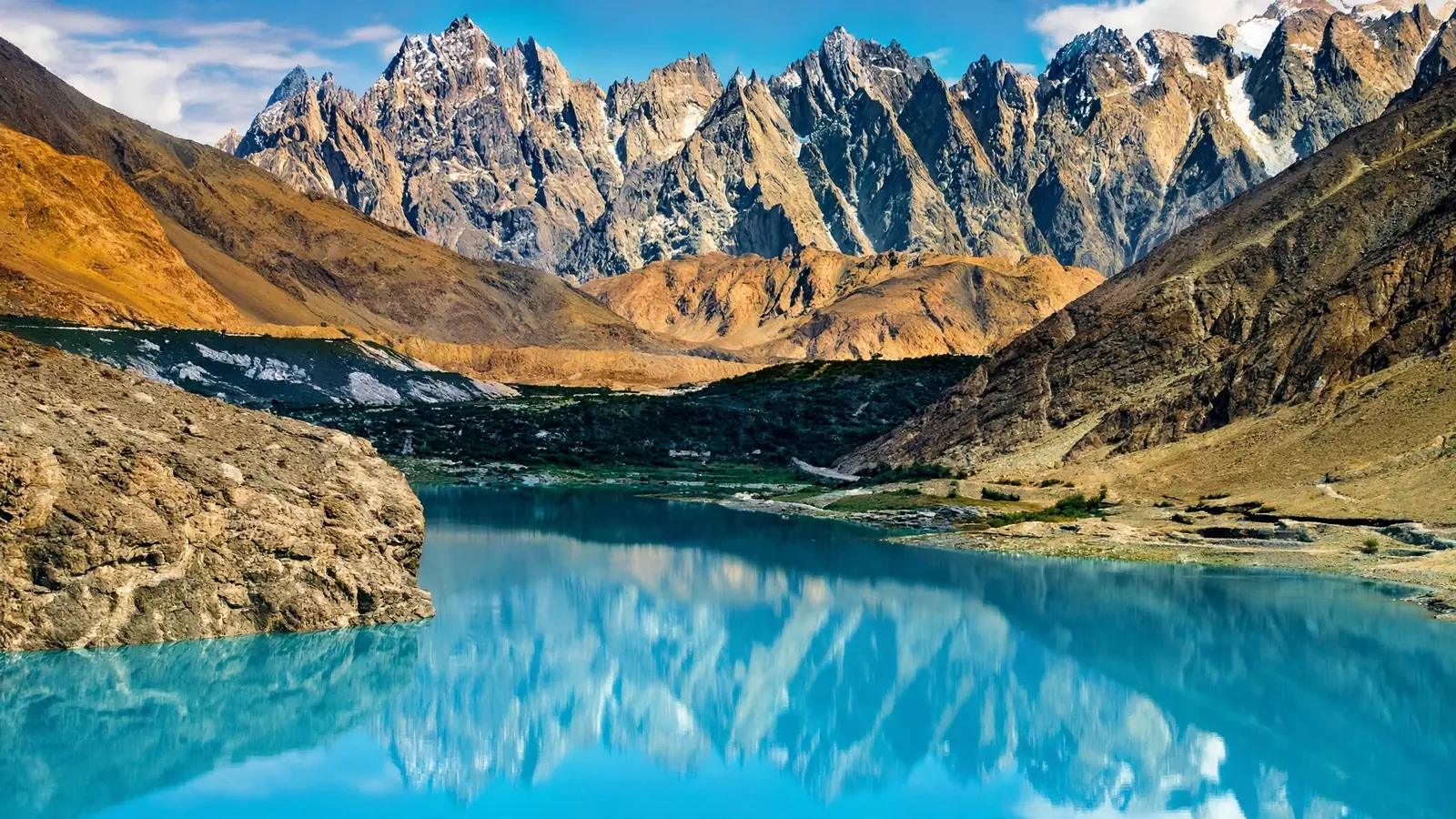
Formed in 2010 when a massive landslide dammed the Hunza River, Attabad Lake stretches for over 20 kilometers between steep mountain walls. Its vivid turquoise water makes it one of the most photographed lakes in Pakistan. Boating, jet-skiing, and lakeside restaurants are available, and the drive along its shore is spectacular.
Khunjerab Pass
At 4,693 meters, Khunjerab Pass on the Pakistan–China border is one of the highest paved international border crossings in the world. The journey from Hunza winds through the Khunjerab National Park, with chances to spot ibex, Marco Polo sheep, and marmots. The pass is generally open from April to November, with exact dates set each year. Bring warm clothing even in summer, as temperatures at the top can be near freezing.
Passu Cones
The jagged, cathedral-like spires of the Passu Cones (Cathedral Ridge) rise above the village of Passu in upper Hunza. The cones are visible from the Karakoram Highway, but the best views come from short walks around the village or the suspension bridge over the Hunza River. Photographers favor sunrise and sunset when the rock glows golden.
Eagle's Nest viewpoint
Above the village of Duikar, Eagle's Nest is Hunza's most famous sunrise spot. From this viewpoint, the panorama spans Rakaposhi, Ultar Sar, Golden Peak, and Ladyfinger Peak. On clear mornings, the peaks turn pink and gold in succession. It is about a 30–45 minute drive from Karimabad on a steep jeep track; most guesthouses can arrange the trip.
Best time to visit
Hunza is a year-round destination, but the standout seasons are:
- Spring blossom (April–May): Apricot, cherry, and apple orchards burst into pink and white bloom against snowy peaks. This is the most magical short season and draws the most visitors.
- Summer (June–September): Pleasant daytime temperatures, green valleys, and full access to high-altitude sights like Khunjerab Pass. Ideal for hiking and road trips.
- Autumn colors (October): Poplar and apricot trees turn gold, orange, and red. Crisp air and clear skies make this a favorite for photographers.
- Winter (November–March): Cold and quiet, with snow in the valley. Some guesthouses close, but the peaceful atmosphere and snow-covered scenery appeal to those seeking solitude.
For a full month-by-month breakdown, read our guide to the best time to visit Hunza Valley.
How to reach
Hunza is reached via the Karakoram Highway (KKH) from Gilgit, roughly a 2–3 hour drive. Gilgit itself connects south to Islamabad and Rawalpindi by road (a long 18–24 hour journey, usually broken with an overnight stop in Besham or Naran) or by short domestic flights (weather-dependent).
Most travelers fly into Gilgit or Skardu and continue by road, or drive the full KKH route from Islamabad for the experience. Public vans and private taxis run between Gilgit and Hunza daily. From upper Hunza, the highway continues to Khunjerab Pass and into China.
Where to stay
- Karimabad: The main tourist hub, with the widest choice of guesthouses, mid-range hotels, and a few boutique properties. Staying here puts Baltit Fort, cafes, and handicraft shops within walking distance.
- Aliabad: Slightly larger and more commercial, with hotels along the highway. A practical base with good transport links.
- Upper Hunza (Passu, Gulmit): Smaller guesthouses and family-run lodges with direct views of the Passu Cones. Quieter and closer to high-altitude attractions.
Book ahead during blossom and autumn seasons, as the best guesthouses fill up early. Many accommodations offer home-cooked local meals, which are worth trying.
Check hotels and prices
Compare current availability and rates for the main bases before you go, especially for July, August and the autumn season.
Hotels in Karimabad → Hotels in Aliabad → Hotels in Passu →How much does it cost
A 7-day Hunza trip can cost anywhere from around PKR 55,000 per person on a tight budget to PKR 180,000 or more for a comfortable private trip. For a full breakdown of transport, hotels, food, and activities in rupees, read our guide to how much a Hunza trip costs.
Tips
- Altitude: Hunza's main towns sit around 2,400 meters. Most visitors feel fine, but take it easy on the first day and drink plenty of water. Khunjerab Pass, at nearly 4,700 meters, can cause headaches and dizziness; descend if symptoms persist.
- Road conditions: The Karakoram Highway is generally in good condition between Gilgit and Hunza, but landslides can occur after heavy rain. Check local conditions before long drives, and allow extra time in your schedule.
- Respect local culture: The majority of Hunza's residents are Ismaili Muslims, known for their progressive and welcoming outlook. Dress modestly in villages, ask before photographing people, and be respectful at religious sites.
- Cash: ATMs exist in Karimabad and Aliabad but can be unreliable. Carry enough cash from Gilgit or Islamabad.
- Connectivity: Mobile coverage is patchy outside towns. Download offline maps before traveling.
Continue exploring
- Plan your trip to northern Pakistan: timing, transport, packing, and budgets
- Skardu & Deosai travel guide: Hunza's Gilgit-Baltistan neighbor, gateway to K2 country
- Fairy Meadows & Nanga Parbat travel guide: the classic high-mountain trek within reach of the Karakoram Highway