
Neelum Valley Travel Guide
Overview
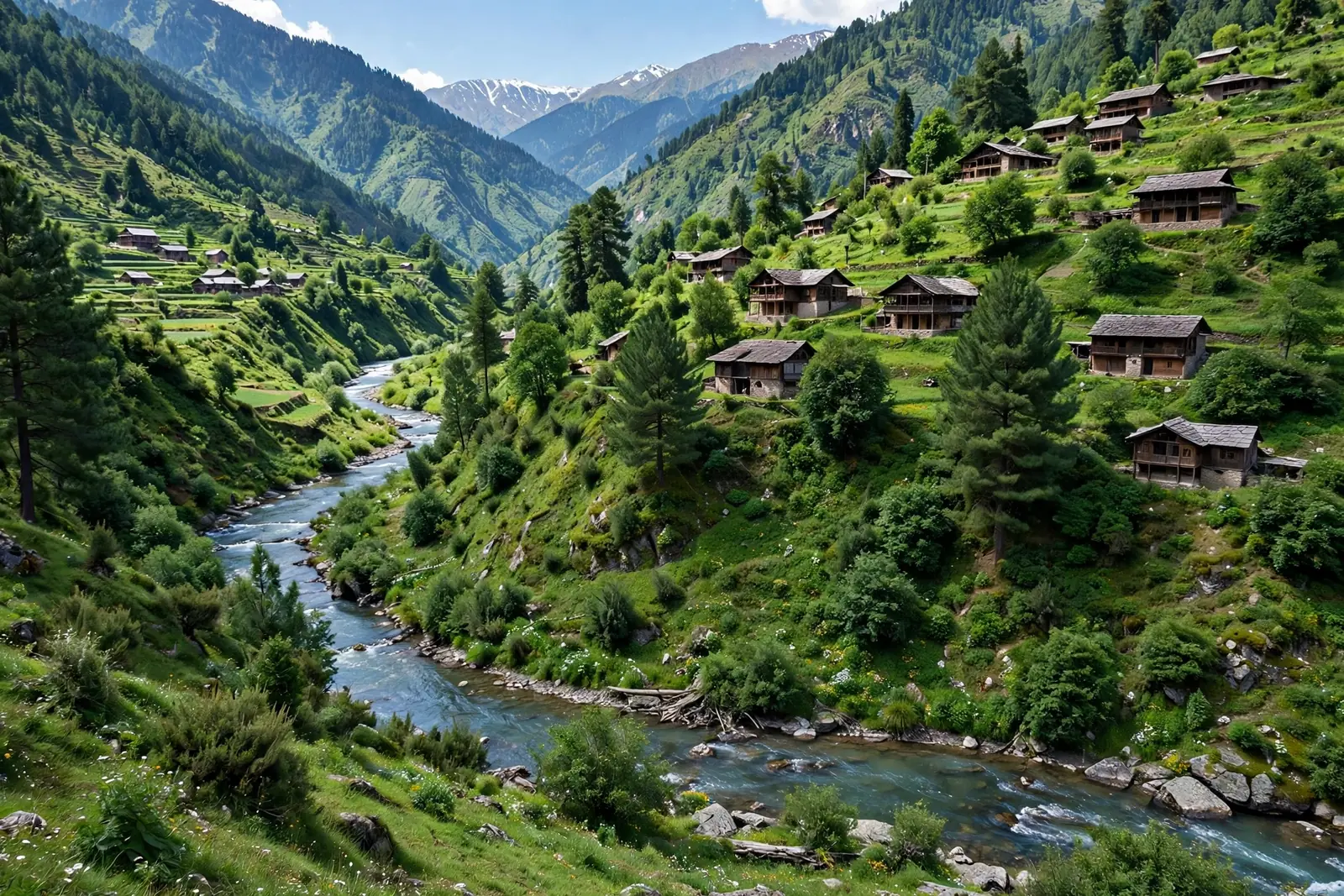
Neelum Valley runs through Azad Jammu and Kashmir, following the Neelum River for some 200 kilometers from Muzaffarabad up to the high valleys near the Line of Control. It is one of the most beautiful valleys in Pakistan: a long corridor of terraced fields, walnut and pine forest, wooden villages, and, at its upper end, high alpine lakes and meadows. Because it sits in Azad Kashmir rather than Gilgit-Baltistan or Khyber Pakhtunkhwa, it has a distinct character: Kashmiri culture, a gentler pace, and scenery that shifts from lush and pastoral in the lower valley to wild and alpine in the upper reaches.
Top attractions
Keran
About 93 km from Muzaffarabad, Keran is the first major stop in the valley: the Neelum River runs wide and clear here, with forested slopes across the water. The riverside setting makes it a favorite for evening walks and photography, and its guesthouses make it a convenient first-night stop.
Sharda
Sharda, roughly 30 km beyond Keran, is the cultural center of the valley: historically a seat of learning and home to the ancient Sharda Peeth ruins. The town sits in a wide, green part of the valley and makes an excellent base for exploring the middle valley, with a good range of guesthouses and the valley's best-stocked bazaar outside Muzaffarabad.
Kel
Kel is the last significant town on the valley road, about 19 km past Sharda, sitting at around 2,097 meters where the Shounter Valley meets the Neelum. It feels like the edge of the known world: beyond it, the road continues only a short way to the chairlift and trailheads. Kel is the gateway to Arang Kel and to the Shounter Valley, and its bazaar, guesthouses, and jeep stand make it the natural base for the upper valley's highlights.
Arang Kel
Reached from Kel by a chairlift across the river followed by a steep 30 to 45 minute hike, Arang Kel is a high meadow village at about 2,554 meters that many visitors call the prettiest spot in the valley. Wooden huts dot flower-filled pastures, with forested ridges rising behind. Most visitors come as a day trip from Kel, but staying overnight lets you see it at dawn and dusk, when it is at its best.
Ratti Gali Lake
One of the great alpine lakes of Azad Kashmir, Ratti Gali sits at about 3,683 meters, reached by a jeep track from the village of Dowarian (between Keran and Sharda). The lake is a vivid blue-green, set in a cirque of peaks with glaciers above and wildflower meadows around. It is accessible only in a short summer window, roughly July to September, depending on snow, and the jeep track is rough, so it is usually done as a long day trip or an overnight camp. If your visit falls in the window, it is unmissable.
Best time to visit
May to October is the main season for the valley road and the towns. June to September brings the warmest weather and fully open side routes; May and October are quieter with pleasant temperatures in the lower and middle valley. Ratti Gali Lake is accessible only roughly July to September; outside that window the track is snowbound.
Winters are cold and quiet, with snow in the upper valley and limited services. The valley road can be affected by snow and landslides in winter; check conditions before traveling off-season.
How to reach
The route starts in Muzaffarabad, the capital of Azad Kashmir, which is about 3 to 4 hours by road from Islamabad via the Murree Expressway and the Muzaffarabad road. From Muzaffarabad, the Neelum Valley road follows the river north: roughly 3 hours to Keran, another 1.5 hours to Sharda, and about an hour more to Kel.
Public transport includes coasters and vans from Muzaffarabad to the main towns, but for flexibility, and for the side tracks to places like Ratti Gali, a private vehicle or hired jeep is far better. The main valley road is paved but narrow and winding in places; beyond Kel and on the side tracks, jeeps are essential.
Note: parts of the upper valley lie close to the Line of Control. Foreign visitors should check current permit requirements, and all travelers should follow local guidance and stay on the main routes.
Where to stay
Keran, Sharda, and Kel each have a solid range of guesthouses and small hotels, from simple rooms to comfortable riverside properties. Sharda has the best selection in the middle valley; Kel is the base for Arang Kel and the upper side valleys. Book ahead in July and August, when domestic tourism peaks.
Arang Kel has a handful of guesthouses and huts right on the meadow, basic but atmospheric, and worth one night for the sunrise alone. Near Ratti Gali Lake, seasonal tent camps operate during the short summer window (July to September); bring warm clothing, as nights at that altitude are cold even in August. Camping elsewhere is possible with your own gear; ask locally about suitable spots.
Check hotels and prices
Compare current availability and rates for the main bases before you go, especially for July, August and the autumn season.
Hotels in Keran → Hotels in Sharda → Hotels in Kel →Tips
- Check road conditions before you go. The valley road is vulnerable to landslides after heavy rain, and side tracks can close temporarily. Confirm the route is open, especially for Ratti Gali and the upper valley.
- Check the weather, especially for high spots. Conditions at Ratti Gali and Arang Kel can differ sharply from the lower valley. A clear morning in Kel does not guarantee a clear afternoon at 3,600 meters.
- Respect local customs. Neelum is a conservative, rural region. Dress modestly, ask before photographing people, and be courteous in villages and around religious sites.
- Carry cash. ATMs are limited beyond Muzaffarabad, and guesthouses, jeep drivers, and the Arang Kel chairlift all operate in cash.
- Time the Ratti Gali window. The lake is only reachable roughly July to September. If it is a priority, plan your whole trip around those months and confirm the track is open before setting out from Dowarian.
- Start side trips early. The chairlift to Arang Kel and the jeep track to Ratti Gali both take time; early starts give you the best light, the calmest conditions, and a buffer for delays.
- Pack layers. The valley spans a huge altitude range: it can be warm in Keran and cold at Ratti Gali on the same day. A warm jacket and rain shell belong in every bag.
- Keep the valley clean. Take litter back with you, particularly at the lakes and meadows, where waste management is minimal.
Continue exploring
- Plan your trip to northern Pakistan: timing, transport, packing, and budgets
- Naran & Kaghan Valley travel guide: another accessible valley trip from the Islamabad side