
Leepa Valley Travel Guide
Overview
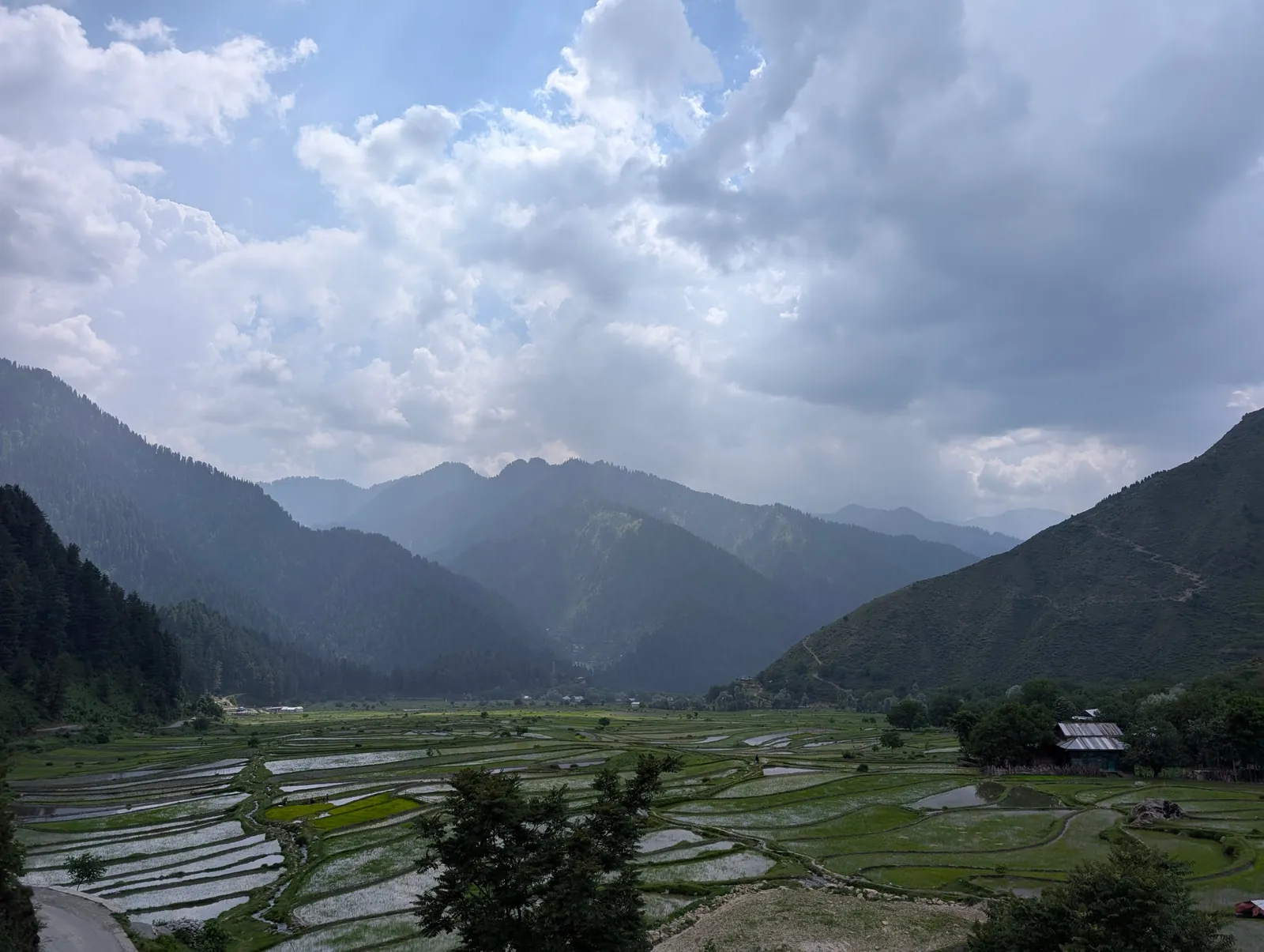
Leepa Valley sits in the Hattian Bala District of Azad Jammu and Kashmir, about 105 kilometers from Muzaffarabad and close to the Line of Control. At roughly 6,000 to 6,500 feet above sea level, it is a valley of a different character from the high Karakoram valleys further north: softer, greener, and deeply Kashmiri. Its signature sight is the terraced rice fields that stair-step down the hillsides, flooded mirror-like in May and June, a vivid green in August, and golden at harvest in September and October. The terraces are dotted with traditional wooden houses built with steep sloped roofs to shed the heavy winter snow.
Because it lies near the LoC, Leepa has stayed off the mass-tourism map, and that is precisely its charm. The valley feels unhurried and authentic: farmers tending paddies, water mills turning in the streams, apple orchards heavy in late summer, and some of the warmest hospitality in Azad Kashmir. It is an ideal 2 to 3 day side trip from Muzaffarabad, or a peaceful destination in its own right for travelers who have already seen Neelum Valley and want somewhere quieter.
Top attractions
Leepa village
The heart of the valley and its main settlement. Leepa village is where the valley's famous rice terraces are at their most photogenic, wrapping around clusters of timber-and-mud houses with their distinctive sloped wooden roofs. Walk the lanes between the paddies, watch the farming cycle up close, and take in the wide views across the valley to the ridges beyond. Early morning, when mist hangs over the flooded fields, is the best time for photography.
Rice terraces
The terraces are Leepa's defining landscape. In May and June, farmers flood the paddies and the valley becomes a mosaic of mirrors reflecting the sky. By August the fields are tall and lush green; September and October bring the golden harvest. The terraces around Nokot are among the most scenic, and this is also one of the few areas where drone photography is permitted, though restrictions apply near the border and military installations, so check locally first.
Reshian Gali
The high pass on the road into Leepa, at about 3,200 meters (10,500 feet), Reshian Gali is a destination in its own right. The climb from Reshian village is steep and 4×4 only, but the reward is a sweeping panorama over the surrounding ridges. The pass holds snow for much of the year, which is why winter access to the valley is so limited. Stop here on the way in or out; on a clear day the views are superb.
Dao Khan
A scenic settlement on the descent from Reshian Gali toward the valley floor. Dao Khan's lanes, orchards, and terraced plots make for a pleasant walking stop and give a good feel for everyday village life in the valley. It is quieter and less visited than Leepa village itself.
Manda Kuli Bela and Shamsha Bari
Manda Kuli Bela is a broad, flat green meadow area in the valley, a lovely spot for a picnic or an easy walk, while Shamsha Bari is a beautiful forested stretch of pine on the valley's edge. Together they show Leepa's wilder side beyond the farmed terraces, and both are favorites for an unhurried afternoon.
Traditional water mills
Scattered along the valley's streams are traditional wooden water mills (chakkis), still used to grind grain much as they have been for generations. They are a small but evocative piece of the valley's living heritage; ask a local to show you one in operation.
En route: Jaskool Waterfall and Dak Bungalow
The journey itself holds two worthwhile stops. Near the Muzaffarabad road, the Jaskool Waterfall tumbles down the hillside at Chamb, an easy photo stop. Further along stands the historic Dak Bungalow overlooking the Jhelum River, where Quaid-e-Azam Muhammad Ali Jinnah and Fatima Jinnah once rested on their return from Srinagar; it has been converted into a small museum with a few rooms available to stay.
Best time to visit
Late April to October is the main season, and the road usually stays open into early November. Each month has its own character:
- May–June: Flooded rice fields, mirror-like paddies, fresh green, and spring flowers. Beautiful and photogenic.
- July–August: Lush green at its peak: tall rice stalks and apple orchards fruiting. Warm days, cool nights.
- September–October: Harvest season: golden fields, crisp air, and clear mountain views. Arguably the prettiest window.
- November–March: The valley turns snowbound and quiet. Access is limited (4×4 only, and the pass may close), many locals move to Muzaffarabad or Rawalpindi for the winter, and services are minimal. Only for well-prepared winter travelers.
How to reach
The journey starts in Muzaffarabad, the capital of Azad Kashmir, about 3 to 4 hours by road from Islamabad. From Muzaffarabad, drive to Hattian Bala and onward to Reshian village. From Reshian, only 4×4 vehicles can handle the steep climb over Reshian Gali and down into the valley. Hire a jeep in Muzaffarabad or Hattian Bala, and travel with a local driver who knows the road.
Public transport to Leepa is limited and impractical for most visitors; a private vehicle to Reshian plus a hired jeep for the pass is the standard approach. Allow a full day for the Islamabad to Leepa journey, and check road status before setting out, as landslides can affect the mountain roads after heavy rain.
Permits and security
Leepa's proximity to the Line of Control means access rules matter. The valley is open to Pakistani nationals carrying a valid ID. Foreign visitors should assume a permit or NOC is required and must confirm the current position with the authorities at Hattian Bala before heading for Reshian. Do not travel on assumptions. All travelers should check the current access situation before the trip, stay on the main routes, follow local guidance, and respect restrictions around border areas and military installations. Drone use is restricted; it is permitted in limited areas such as the Nokot rice fields but banned near the border.
Where to stay
Lodging in Leepa is basic: simple guesthouses in Leepa village and a few rooms at the Dak Bungalow en route. Do not expect the hotel range of Muzaffarabad or the Neelum Valley towns: confirm your accommodation in advance, carry food, water, and cash (ATMs are scarce), and bring warm layers even in summer, as nights at this altitude cool down quickly. For a more comfortable base, many travelers stay in Muzaffarabad and visit Leepa as an overnight trip.
Check hotels and prices
Compare current availability and rates for the main bases before you go, especially for July, August and the autumn season.
Hotels in Muzaffarabad →Tips
- Check access before you go. Confirm the Reshian road is open and the current permit position at Hattian Bala, as conditions and rules can change.
- Hire local. A local jeep driver and, ideally, a local guide make the trip smoother, safer, and far more interesting.
- Carry the essentials. Food, water, cash, a torch, warm layers, a rain jacket, and offline maps; the valley's shops are few and basic.
- Time the terraces. For the flooded mirror-fields come in May–June; for green paddies, August; for harvest gold, September–October.
- Respect the farmland. The terraces are people's livelihoods: walk on paths, take your rubbish out, and ask before photographing people.
- Dress modestly. Leepa is a conservative rural valley; modest dress and courteous behavior go a long way.
- Start early. The jeep climb over Reshian Gali takes time, so an early start gives you the best light and a buffer for delays.
Continue exploring
- Neelum Valley travel guide: Azad Kashmir's other great valley, an easy pairing with Leepa
- Plan your trip to northern Pakistan: timing, transport, packing, and budgets